The world of military aviation is on the verge of a major transformation as Japan unveils its groundbreaking 6th-generation fighter jet, the Mitsubishi F-X. This revolutionary aircraft is set to redefine aerial combat, pushing the boundaries of stealth, speed, and advanced warfare technology.
With the rapid advancement of fighter jets by global superpowers like the United States, China, and Russia, Japan has recognized the urgent need to develop a cutting-edge air combat platform. The Mitsubishi F-X is designed to counter modern threats, enhance Japan’s defense capabilities, and strengthen its position in the Indo-Pacific region.
But what makes Japan’s new fighter jet truly remarkable? Let’s explore the groundbreaking innovations, technological advancements, and the global implications of this game-changing aircraft.
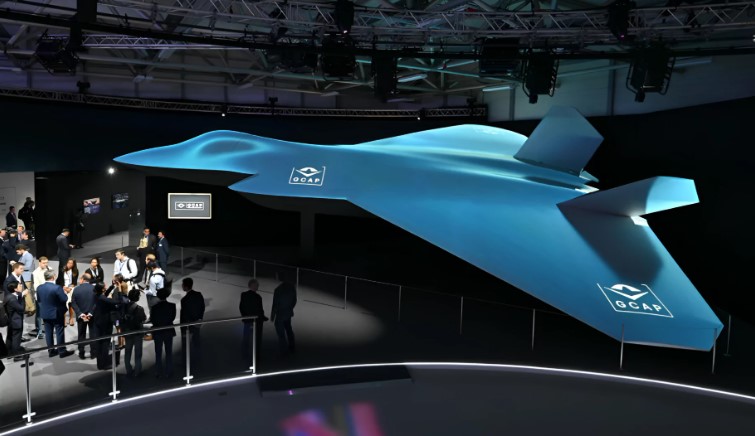
Japan isn’t going at it alone. In December 2022, Japan, the United Kingdom, and Italy officially announced the launch of the Global Combat Air Programme (GCAP). This historic agreement merges Japan’s Mitsubishi F-X program with the UK’s Tempest fighter jet project and Italy’s next-generation fighter technology.
This trilateral partnership aims to deliver an operational 6th-generation fighter jet by 2035, incorporating advanced stealth, AI-assisted combat capabilities, and next-level weaponry.
- United Kingdom: Contributing expertise in digital flight controls, stealth coating, and combat data processing.
- Italy: Offering experience in radar development and network-centric warfare.
- Japan: Leading in stealth materials, avionics, and electronic warfare systems.
The goal is to create an aircraft capable of outperforming the United States’ NGAD (Next-Generation Air Dominance) and China’s emerging J-XX programs.
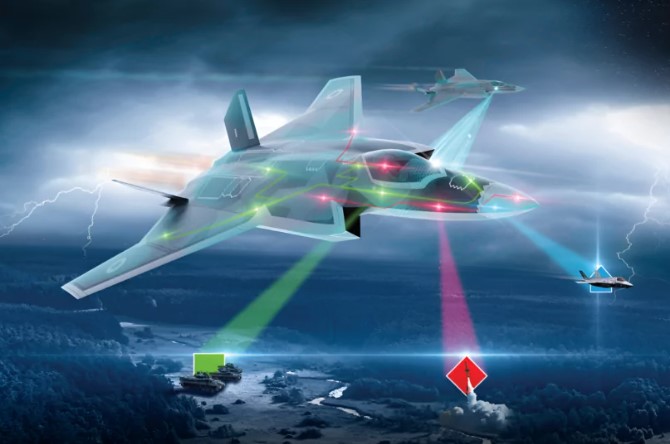
The F-X is expected to incorporate some of the most advanced technologies ever developed for air combat, setting new standards for fighter jets worldwide.
1. Unparalleled Stealth Capabilities
- The Mitsubishi F-X will feature next-generation stealth technology, making it almost invisible to enemy radars.
- It will utilize advanced composite materials and an optimized shape to reduce its radar cross-section.
- Radar-absorbent coatings and active camouflage technology may allow the jet to blend with the sky, making detection nearly impossible.
2. AI-Assisted Warfare & Autonomous Combat
- One of the most futuristic aspects of the F-X is its use of Artificial Intelligence (AI).
- AI will analyze real-time combat scenarios and assist pilots in making split-second decisions.
- Autonomous drone wingmen will be integrated into the F-X’s operations, enabling coordinated attacks with unmanned aircraft.
3. Hypersonic & Laser Weapons Integration
- The F-X is rumored to be equipped with hypersonic missiles, capable of striking targets at Mach 5 speeds.
- Japan is also researching directed energy weapons, including laser-based air defense systems that can neutralize incoming missiles before they reach the aircraft.
4. Next-Level Avionics & Sensor Fusion
- The fighter jet will include a 360-degree sensor system, similar to the F-35 but far more advanced.
- It will use data fusion to combine information from multiple sources, enhancing situational awareness and combat effectiveness.
- Pilots will be able to see through the aircraft’s body using advanced helmet-mounted displays.
5. Future-Proofed Powerplant
- Japan is developing a next-generation adaptive cycle engine that will dynamically adjust power output for speed and fuel efficiency.
- Unlike conventional jet engines, this one will be capable of switching between high-speed mode and fuel-saving mode, increasing combat range without needing frequent refueling.


